Litter Leader
A game that teaches youth in developing nations about recycling
Project Overview
This project was created in 2013 to teach children how to recycle in developing nations. The project was possible thanks to the EUREKA undergraduate research grant at Sam Houston State University, which I was attending as an undergrad student at the time. The project was a multi-disciplinary team effort, with art, marketing, business, and animation students all collaborating to make this possible.
The concept of trash and recycling is a broad challenge, and one that changes from depending on the country and culture of the person. Because of this, it was important that from the beginning we had a diverse team of people spanning multiple disciplines, backgrounds, and ages, in order to design a solution that could cater to people all over the world. As the goal of the game was to teach kids in developing nations how to recycle; we were going to test the game in schools in Egypt and South Africa.
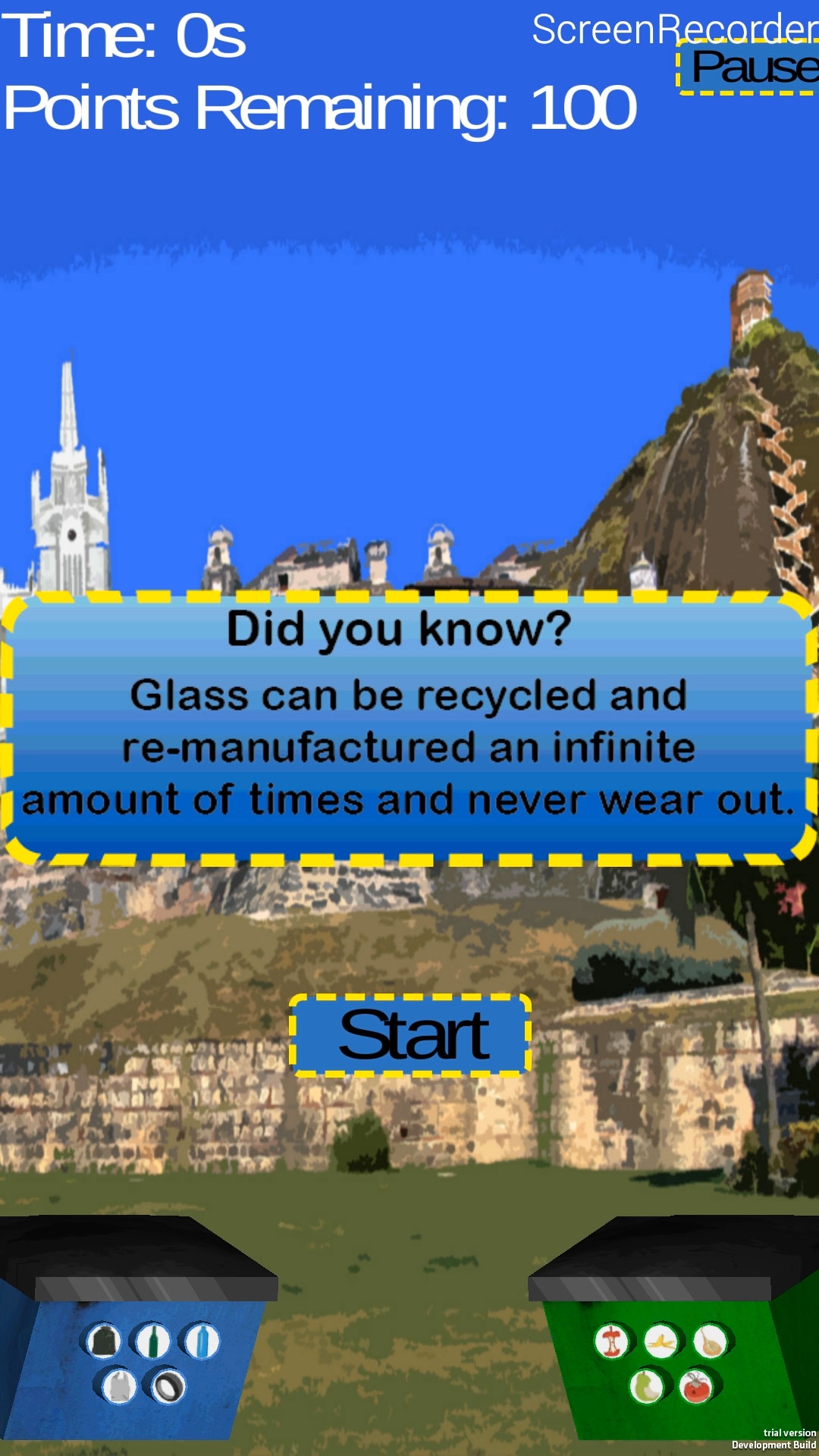
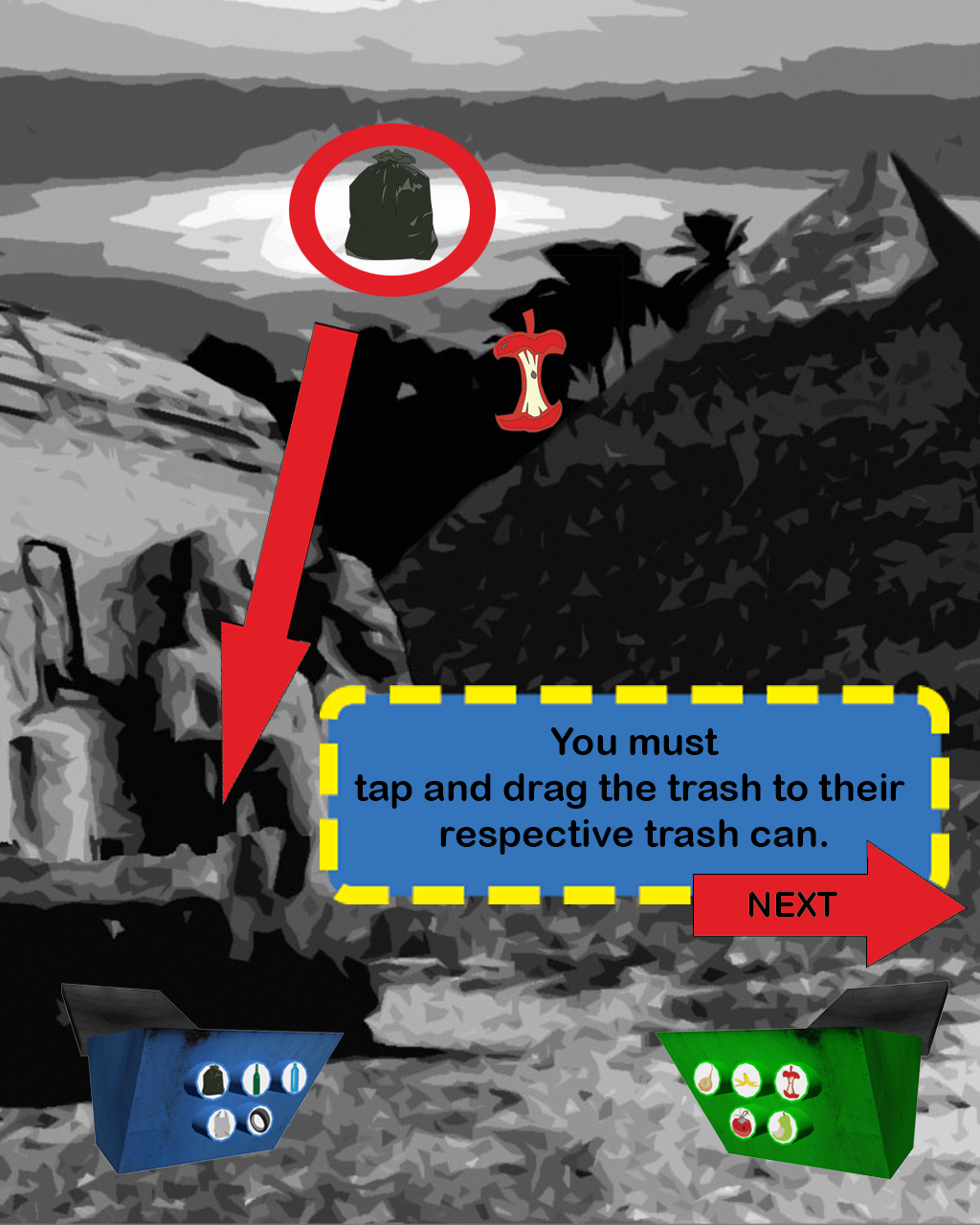
The game mechanics of the project were simple. As different types of trash rained down to the floor, the player had to identify each type of trash and place it in the appropriate container. To keep things simple we had a "Synthetics" trash can, and a "Organics" trash can. The background of each level was representative of different countries around the world, and as the players kept organizing more trash in their respective containers, the black and white backgrounds would slowly regain color, until full vibrant colors were returned to the world.
Once we had a stable Beta of the game, the team travel to Cairo, Egypt, where Dr. Hannah Gerber had contacted schools in the area where we could test the impact of the game. We decided to gather data through snowball sampling, letting the students that tried our game spread the word. In total we were able to gather data from three different schools in the area with great feedback from the students. They loved the color-changing levels with students immediately able to understand the design choice behind. But perhaps the biggest surprise for us, was the big impact the loading screens had on the students.
Human curiosity is unstoppable, and in order to spark that curiosity, we placed tidbits of information about recycling during the loading screens for each level. The students in Egypt reacted in ways we did not imagine. They were amazed by this information! "Glass can really be recycled to infinity?" said one of the girls. A few days later, that same girl had gotten together with her friends and come out with a questionnaire to pass in her village to find out what type of trash their community was producing, and how to recycle it. One of the parents jokingly said to us "What have you done to my daughter? all she does is spent time in front of the computer researching". Slowly but surely this game made a huge impact in the lives of this students, and broaden their horizons to create change in their community, giving us proof that video games can lead to pro-social activism.
Special shoutout and thanks go to Dr. Hannah R. Gerber, Professor of Literacy at Sam Houston State University. Thank you for giving me a chance to prove that video games can be used to create a positive social change in the world, allowing me to sit in your doctorate level classes to soak in knowledge, and believing in me to complete this project.
🔬 Research & Findings
This article explores the design processes in creating a pro-social mobile game, "Litter Leader." Following the Egyptian Revolution, "Litter Leader," a game designed for Android devices, was created to foster community change among Egyptian youth. By tracing the meaning-making that occurred with 20 Egyptian youth who playtested "Litter Leader," the researchers found that the elements of game mechanics, learning content, and prosocial play were crucial for designing mobile games meant for social good and community change. The researchers then developed the Pro-Social Play Schematic as a diagram to aid game developers in creating games that both speak to youth and encourage them to become local change agents.
Project Scope
- RoleLead Designer & Researcher
- PlatformAndroid
- ResearchPlaytest research with 20 Egyptian youth · US Patent US20160247414A1
- LocationCairo, Egypt
- Years2013
Media Gallery