GeneEthics
A classroom simulation that maps how students reason through an ethical dilemma
Project Overview
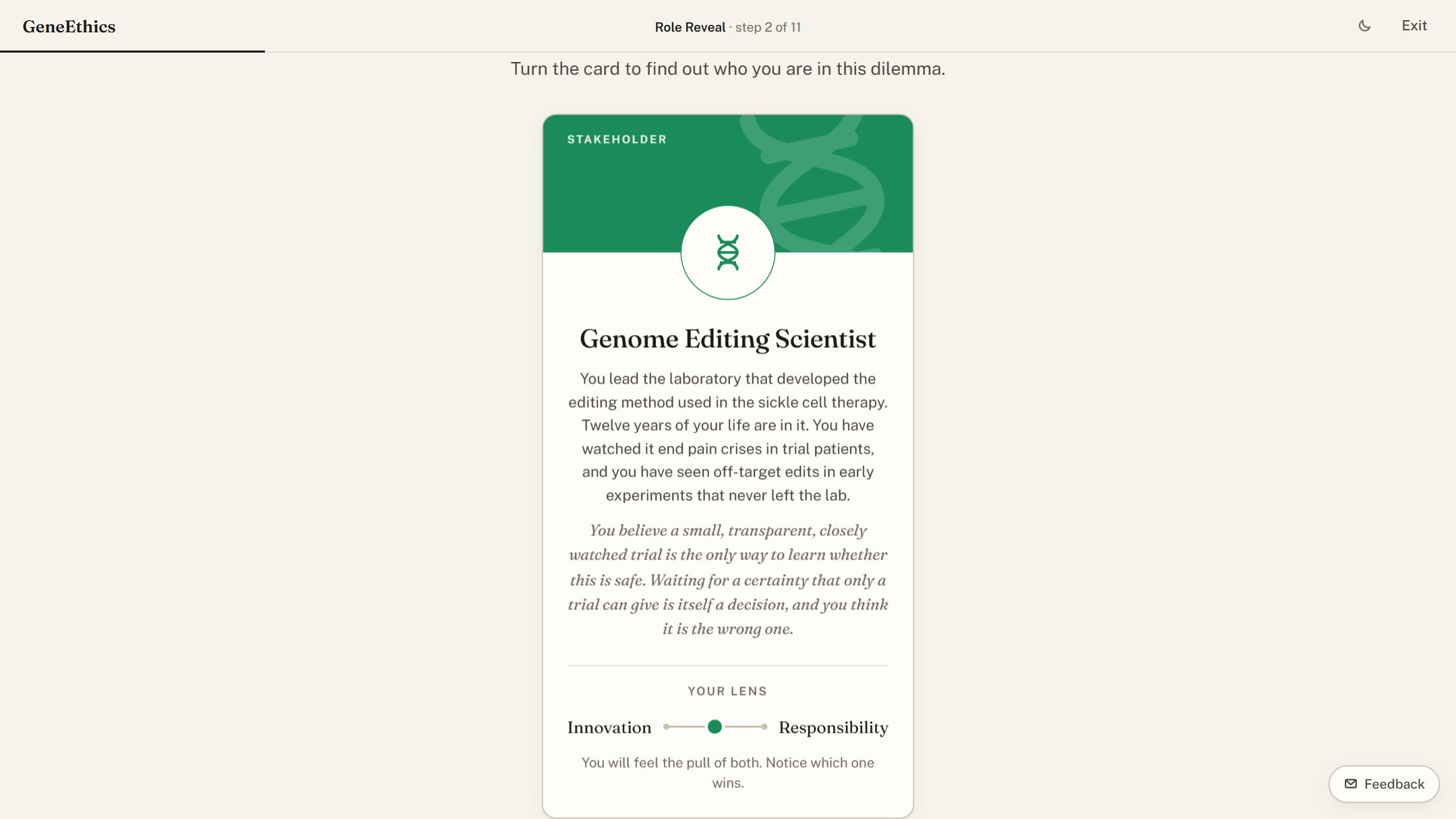
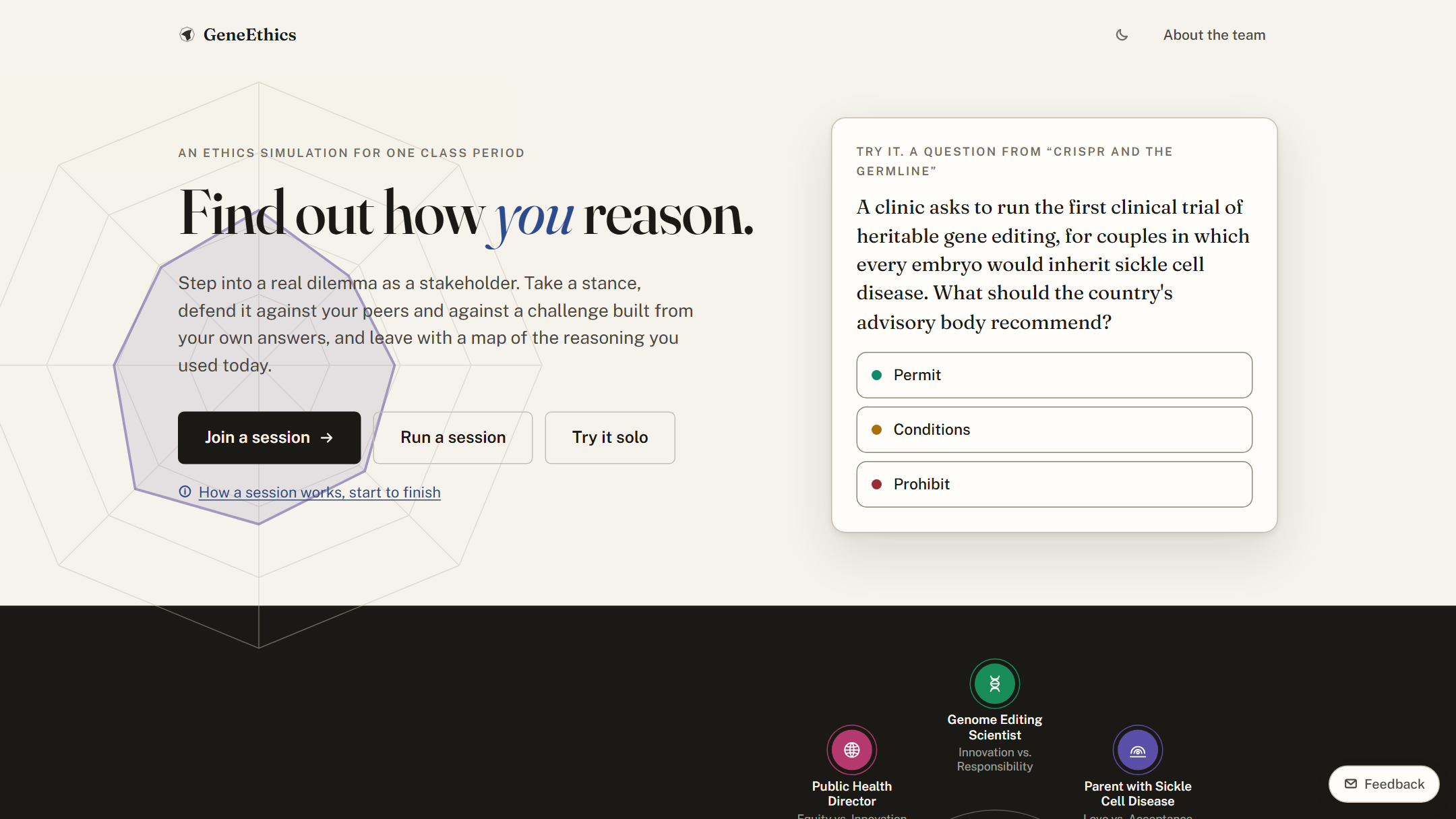
GeneEthics turns one class period into a structured ethical debate. Students join with a four-digit code, with no accounts, read a real case and its sources, and are each dealt a stakeholder role: a genome editing scientist, a parent with sickle cell disease, a public health director. Each role has its own priorities.
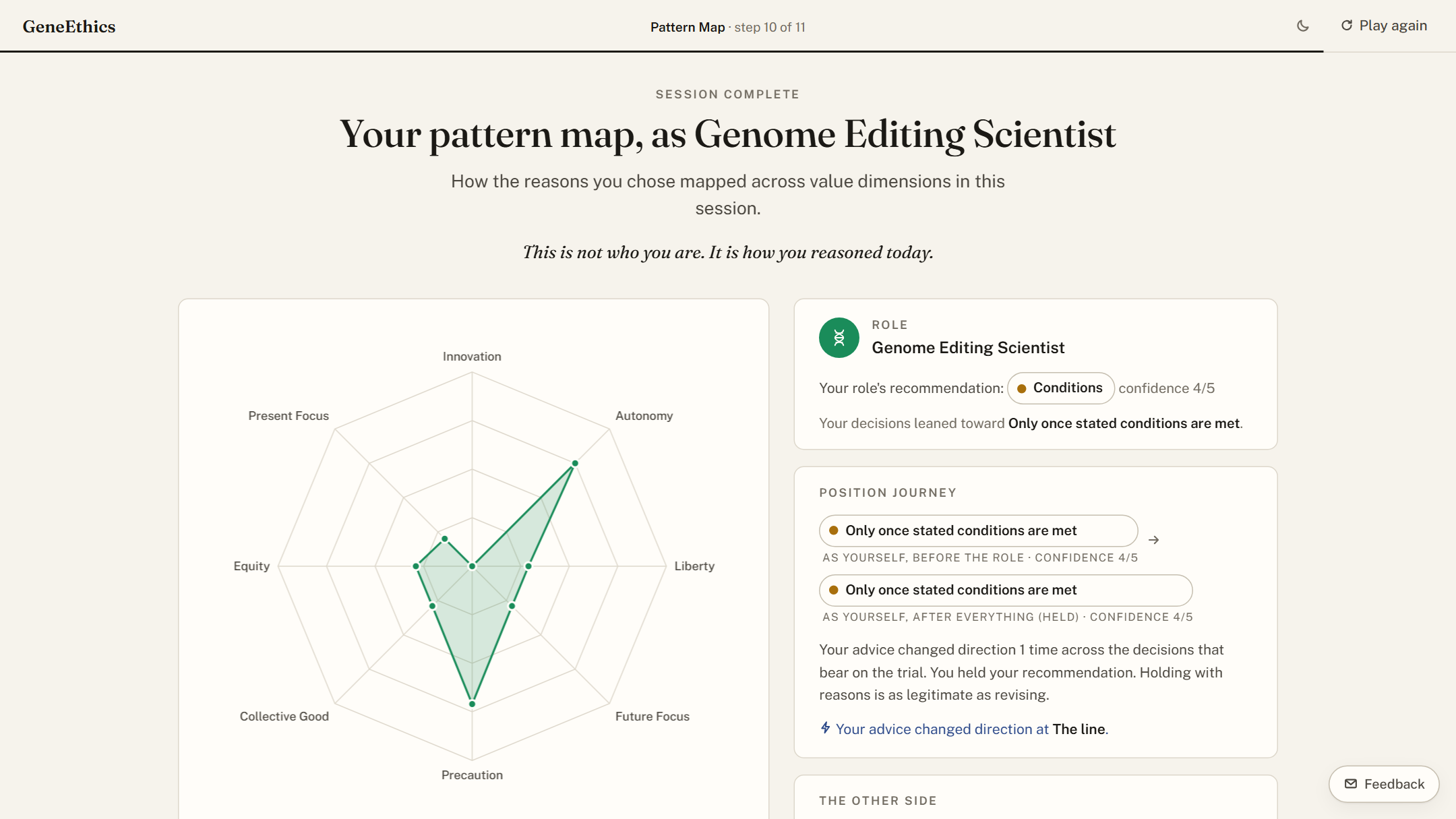
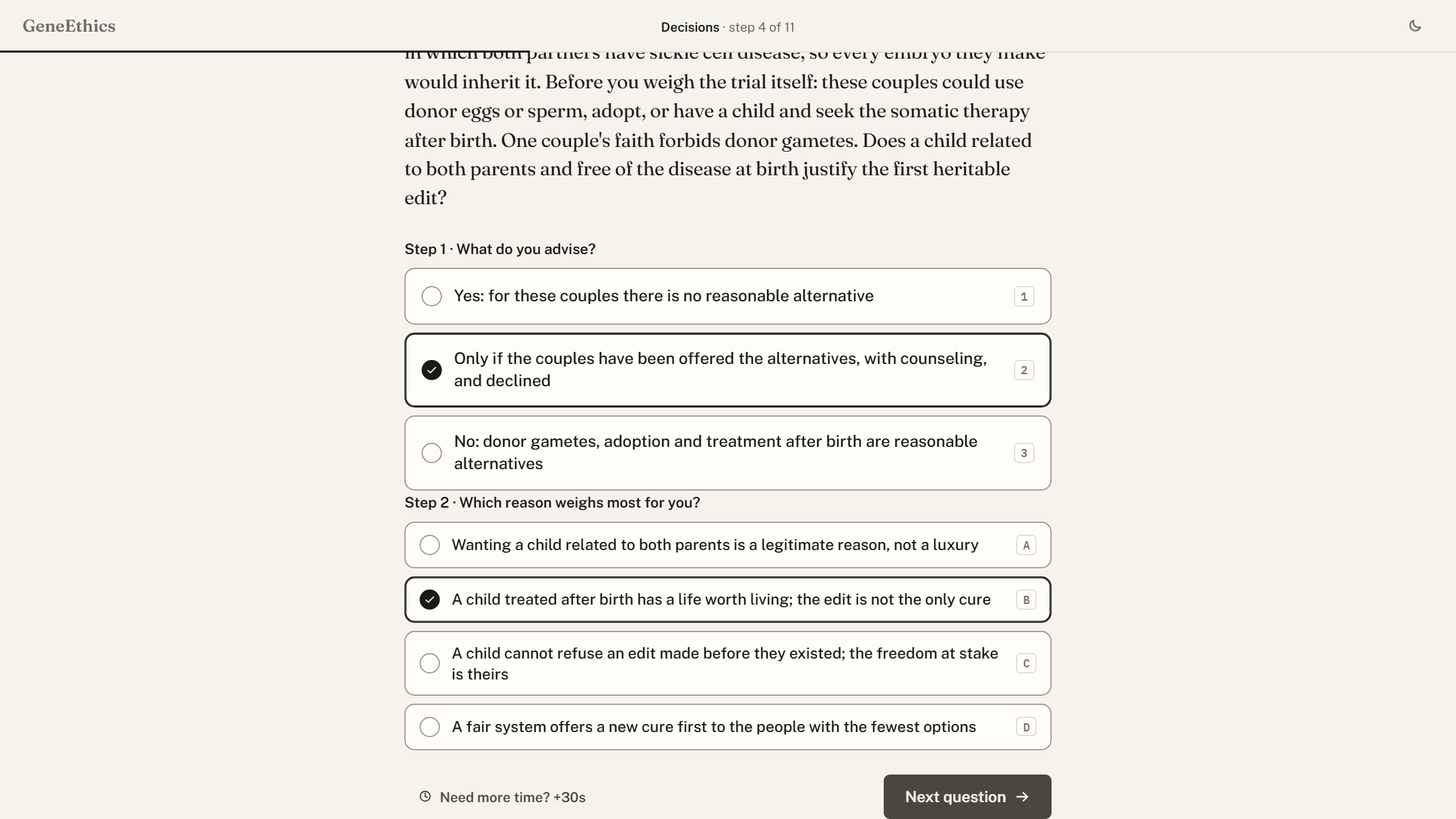
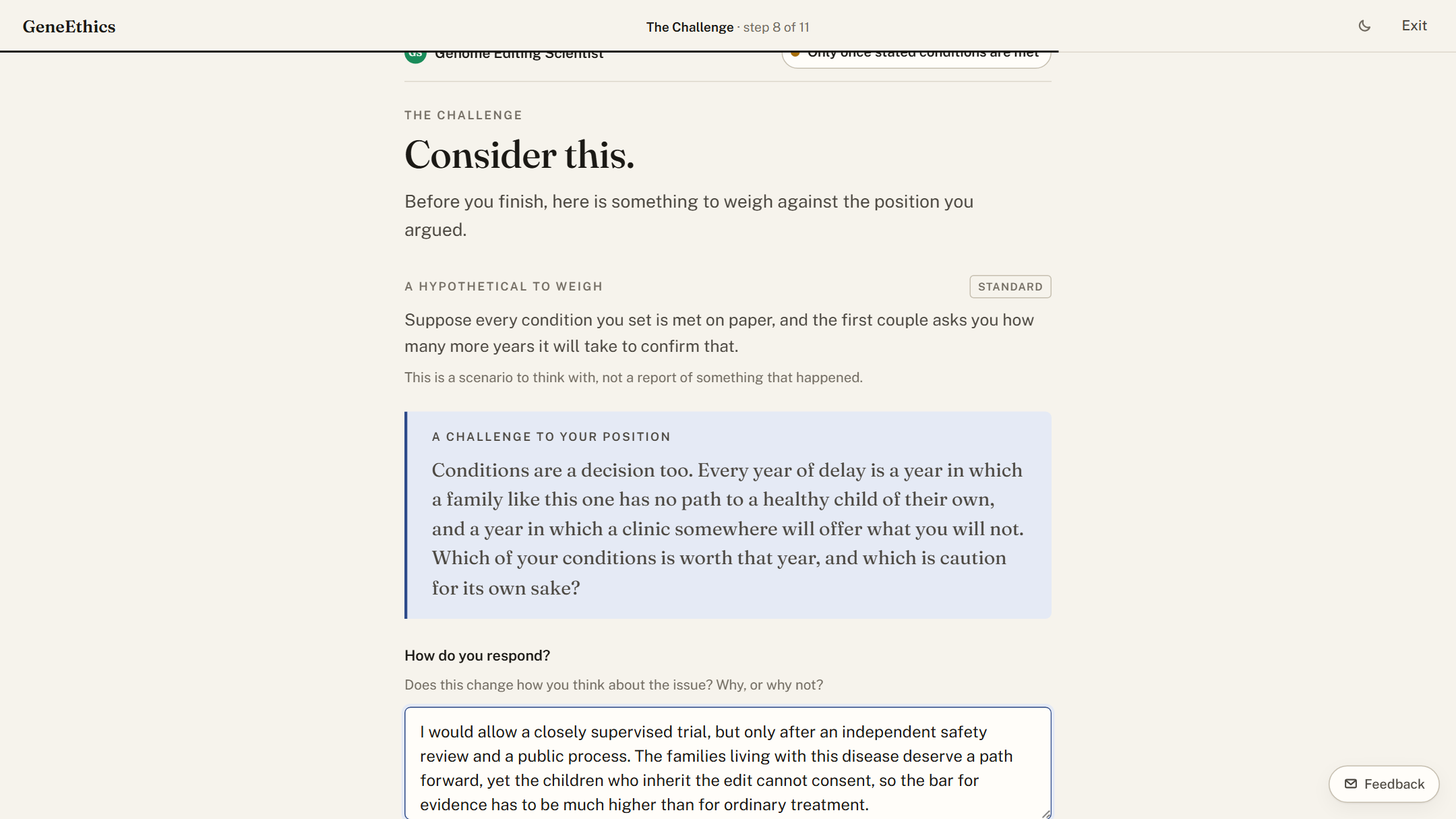
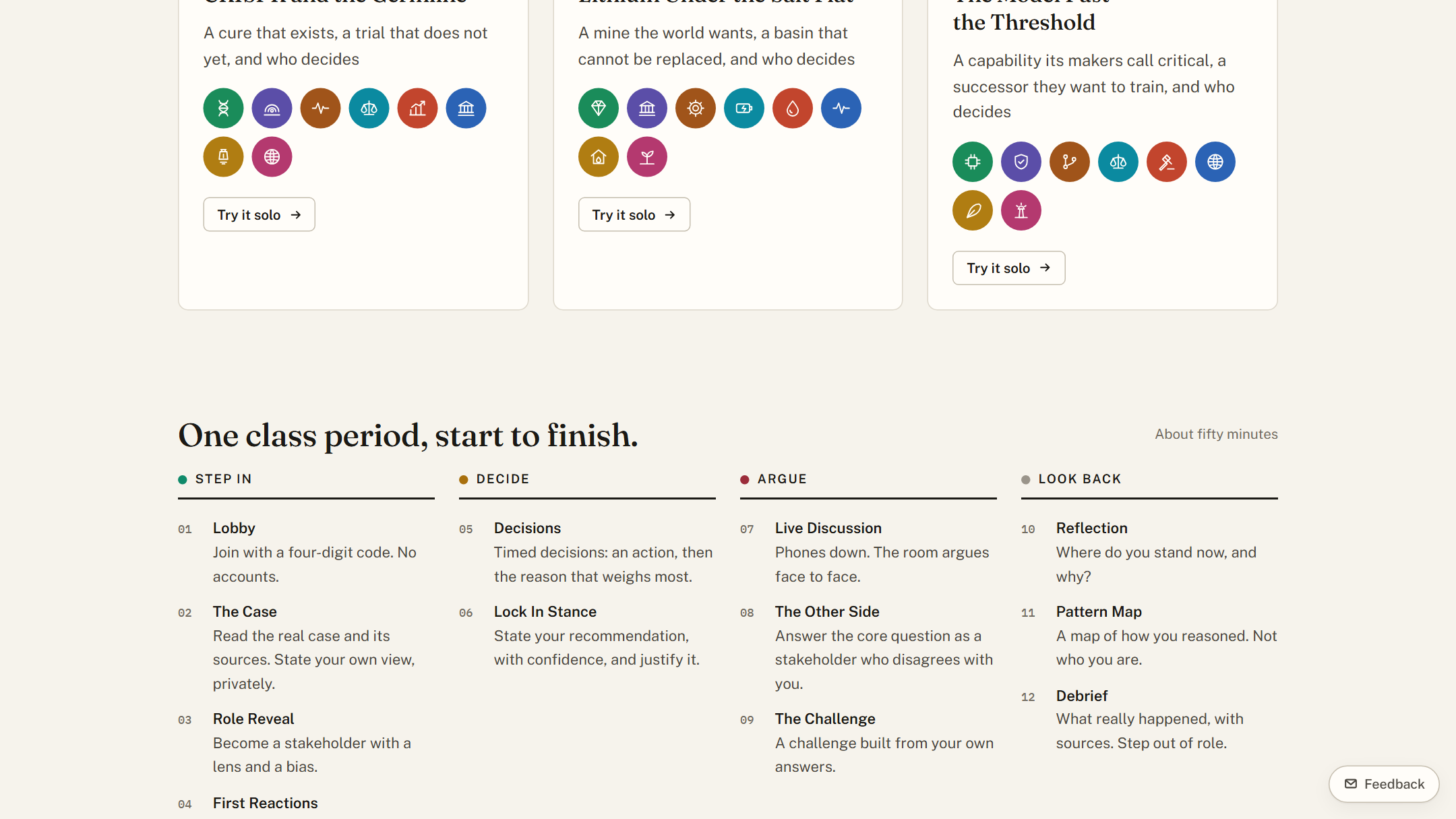
In role, students make timed decisions, choosing an action and then the reason that weighs most. They lock in a stance, put their phones down and argue face to face, answer the core question as a stakeholder who disagrees with them, and respond to a challenge built from their own answers. The session ends with a Pattern Map showing which values their reasons leaned on. It describes how a student reasoned in that session, not who they are.
The platform keeps the measurement fixed and the content flexible. A case is a data file, not new code, and the library now holds three: CRISPR and the Germline, Lithium Under the Salt Flat, and The Model Past the Threshold, a frontier-AI governance case. Each has eight stakeholder roles and cited real-world sources, and the third was added without changing the engine. Teachers get a live dashboard, a projector view, CSV export, and a teacher guide.
GeneEthics started at the Harvard Innovating Civil Discourse Hackathon in May 2026 and is built by a team of four: Raia Karmali, Shreya Goel, Abeeha Tahir, and Luis Gaitan, who leads product, software, and game design.
🔬 Research & Findings
The measurement layer is grounded in moral psychology and ethics-education research. The Pattern Map applies Schwartz's model of values in tension, the questions follow the Intermediate Concept Measure format (a dilemma, an action, a justification), and the session is structured on Rest's Four Component Model. By design, the tool never scores which side a student chose and never presents a result as a personality trait.
Project Scope
- RoleProduct, Software & Game Design Lead (team of four)
- PlatformWeb · live multiplayer classroom sessions
- ResearchHarvard Innovating Civil Discourse Hackathon, May 2026
- LocationCambridge, MA
- Years2026
Media Gallery